


To receive important alerts and updates from Gold Coast Primary Health Network, please submit the form below.
Receive important alerts and updates from Gold Coast Primary Health Network.
"*" indicates required fields
To receive important alerts and updates from Gold Coast Primary Health Network, please submit the form below.
"*" indicates required fields

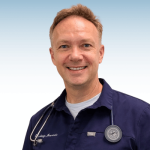
Dr Serge Macanovic is a GP at Our Medical Gold Coast in Oxenford, as well as a GP Supervisor for The Royal Australian College of General Practitioners (RACGP). He is also a long-time supporter of the Gold Coast Primary Health Network’s (GCPHN’s) Clinical Placements Program, where he provides GP supervision for Bond and Griffith University medical students. In this Q&A, he shares more about what it involves, plus his personal experience of becoming a GP and how it’s shaped his determination to give back.
Dr Serge Macanovic (Serge) fled his homeland during the siege of Sarajevo in the Bosnian War as a child – and has settled on the northern Gold Coast after perseverance and a commitment to becoming well educated saw him study in the halls of Cambridge. Away from medicine, he’s mastered feats in nature – like climbing Mount Kilimanjaro; been committed to staying fit and healthy – including racing in long-distance running events; and become a published author.
 “These experiences have profoundly changed the way I think about health and reshaped my role as a GP, transforming me both personally and professionally,” he says.
“Through them, I’ve developed a deeper understanding of my body and learnt firsthand the value of perseverance and determination.
“Kilimanjaro taught me patience more than anything else. You cannot rush a mountain. You move step by step, listen to your body, and respect where you are on the journey. That experience I brought into my everyday general practice. Real health change rarely comes from quick fixes. It comes from steady progress, sustained over time.
“My experiences have also helped me connect with patients on a human level. When people see that their doctor is not perfect, that I struggle, adapt and sometimes have to reset my goals, it makes conversations about health feel safer and more honest. It shifts the focus away from perfection and towards doing what is possible right now.”
About the GCPHN Clinical Placements Program
The GCPHN Clinical Placements Program is helping address future workforce challenges by supporting medical and nursing students to experience primary care firsthand. Working in partnership with Griffith University, Bond University, Southern Cross University and the Griffith School of Nursing and Midwifery, the program coordinates general practice placements across the Gold Coast and Brisbane regions, creating meaningful learning opportunities within primary care settings.
By connecting students with experienced clinicians and real-world general practice environments, the program is fostering interest in careers in primary health care and helping build the next generation of healthcare professionals our communities will rely on. As placement numbers continue to grow each year, so too does the program’s contribution to a sustainable and skilled primary health care workforce for the future.
Through the program, Serge has been able to support medical students and with current information, best practice guidelines and material to support student placements. He shares more here.
During my career, I’ve trained under exceptional clinicians who have set a standard that has stayed with me ever since. Learning from professors such as Sir Roy Calne, Lady Sylvia Lachmann, and many other eminent doctors showed me what excellence in medicine truly looks like. They’ve demonstrated that medicine is as much about judgment, humility, and care as it is about knowledge. Their influence has shaped how I think, practise, and teach.
What keeps me engaged in clinical placements now is a deep sense of responsibility. Years of training across diverse systems, cultures, and challenges have given me a broad, hard-earned perspective, and passing that knowledge on matters greatly to me. I believe that future doctors benefit not only from textbooks but also from lived experience, stories of resilience and uncertainty, and the chance to see how medicine is practised when conditions are far from ideal.
By sharing what I have learned, I hope to help shape clinicians who are curious, grounded, and better prepared to build on what came before them.
Most days, teaching fits naturally into the rhythm of the clinic. I see my usual list of patients, with a student alongside me. Sometimes they observe quietly; other times, they step in to take a history or perform a focused examination, always with the patient’s consent. Between consultations, we talk through why I asked certain questions or chose one management plan over another. It is not a separate teaching session. It happens in real time, right in the middle of everyday practice.
Balancing patient care with teaching is fundamentally about judgement. Most patients are happy for a student to be closely involved, while some prefer to keep the consultation with me. I always keep safety, time, and the patient’s comfort front and centre, but I have found that most people are remarkably generous once they understand they are helping train future doctors.
They leave with a far richer understanding of medicine than hospital rotations alone can offer. In hospital, you tend to meet patients at the sharp end of illness, once things have escalated. In general practice, you see what comes before that, including everyday problems, prevention, and how illness fits into people’s lives, shaped by family, work, and financial pressures.
By the end of a placement, most feel far more confident managing common conditions, recognising when reassurance is enough and when referral is needed. They also gain a real appreciation of the GP’s role as the steady centre of the health system, coordinating care and holding the bigger picture. Many tell me the experience changes how they think about their future, opening their eyes to career paths they had not fully considered.
One moment that has stayed with me involved a student who was very quiet when she first began her placement. She tended to hang back, listening carefully but rarely speaking up. About halfway through her time with us, we saw a young mother who was clearly struggling with postnatal anxiety and had found it difficult to open up during previous visits. The student sat with her and asked gentle, thoughtful questions. There was something in her tone and presence that resonated deeply. Gradually, the patient began to share things she had not said aloud before, even to me. You could almost see the tension lift as she spoke.
When she left the room, she seemed lighter and more settled, as if a weight had finally been acknowledged. Watching that unfold was deeply powerful. Seeing a student build trust so naturally reinforced for me the idea that connection and attentive listening lie at the heart of good medicine. It also highlighted the impact even a short placement can have, not only in developing clinical skills but also in shaping how future doctors relate to their patients. Moments like that stay with you, making every effort involved in teaching feel entirely worthwhile.
I would say give it a proper go. It is genuinely one of the most worthwhile additions to your week. It keeps you sharp, breaks up the routine, and makes the job more enjoyable. You are not just getting through consults; you are shaping how the next generation of doctors understands general practice, which matters enormously right now, given the pressures on the workforce.
Patients are usually very positive and enjoy being part of the process, while students bring a fresh energy that lifts the whole practice. It also feels like an investment in the future. Teaching helps keep the profession vibrant and attracts thoughtful, capable people to primary care. If you are even slightly curious, have a chat with someone already involved. Most of us end up wondering why we did not start sooner.


So we can provide you with the most accurate information,
please tell us a little more about yourself

